How to Tell a Well-Poured Beer in Prague: A Champion Tapster's Checklist
In Prague a beer arrives at your table within minutes of sitting down, and in most pubs it is good. But not all Czech beer is poured with the same care, and the difference shows before you even take a sip. Filip Gibiš, who won the Pilsner Urquell Master Bartender 2026 title as the best tapster in the country, says that a badly kept beer gives itself away at once, in the foam and on the rim of the glass. Here is what to look for, based on his advice and on the standard rules of Czech beer service.
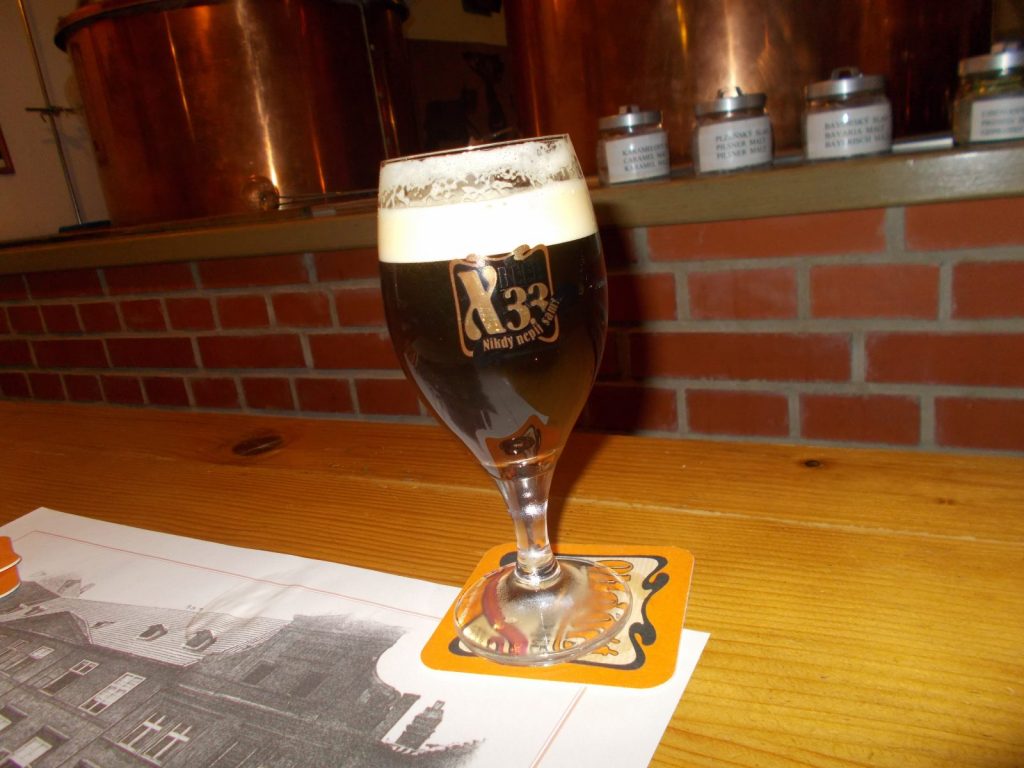
A firm, dense head that sits on the beer instead of fizzing away.
Weather in Prague
Updated 3 Oct, 12:45
Exchange rate
| 1 EUR (Euro) | 24.47 CZK |
| 1 USD (US dollar) | 21.80 CZK |
| 1 GBP (British pound) | 28.77 CZK |
ČNB rate, 2 Oct 2026
The five-second check before the first sip
- The foam. It should be tall, white and creamy, made of bubbles so fine you can barely see them, and it should sit on the beer for minutes rather than collapse. Large, soapy bubbles that pop and vanish mean a dirty glass, a badly kept tap or a beer that has been standing.
- The glass. According to Gibiš, a good beer starts with a glass that is perfectly clean, wet and cold. That is why a good tapster rinses every glass in cold water just before pouring. A dry, warm glass from the shelf kills the foam.
- The rim. If you see chain-like streaks or lines along the edge of the glass, it was badly washed, and the beer will suffer for it. Gibiš names this as one of the first things that gives a poor pub away.
- Bubbles on the walls. Strings of bubbles clinging to the inside of the glass are another sign of grease or detergent left on it. In a clean glass the bubbles rise from the bottom and go straight into the head.
- Temperature. Czech lager is served cellar-cool, not ice-cold. A glass that is frosted or a beer so cold you cannot taste it is a way of hiding a tired beer.
As you drink: the rings on the glass
A properly poured beer in a clean glass leaves a ring of foam on the inside of the glass after every sip. By the time you finish you can count your sips down the side. If the glass comes back smooth and empty, the foam was not what it should have been.
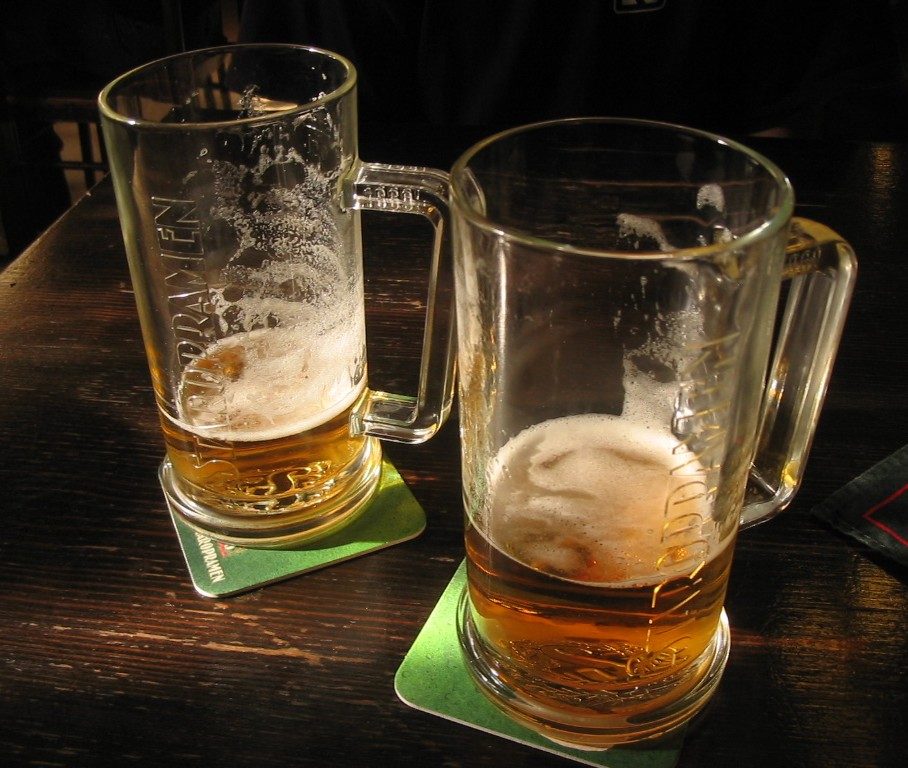
The rings of foam left by each sip: the sign of a clean glass and a well-kept beer.
Three ways to pour, and which one to order
Czech pubs serve the same beer in different ways, and a good tapster pours each one on purpose. In Gibiš’s short version, hladinka is the balanced everyday pour, šnyt is for tasting, and mlíko is the sweetest, with the most foam and the least fizz.
| Pour | What it looks like | Why order it | ||||
|---|---|---|---|---|---|---|
| Hladinka | The classic: a full glass of beer under a firm, creamy head of about three fingers. | |||||
| The best balance of carbonation and foam. This is what you get if you simply ask for a beer. | ||||||
| A tasting pour that lets the aroma open up. A good way to try a beer before committing to a full one. | ||||||
| Mlíko («milk») | A glass almost entirely of wet, dense foam. | The sweetest and least fizzy way to drink it, meant to be finished quickly, often as the last beer of the evening. |
If a pub can pour all three properly and the staff do not look surprised when you ask for a šnyt or a mlíko, you are in good hands.
Signs that a pub takes its beer seriously
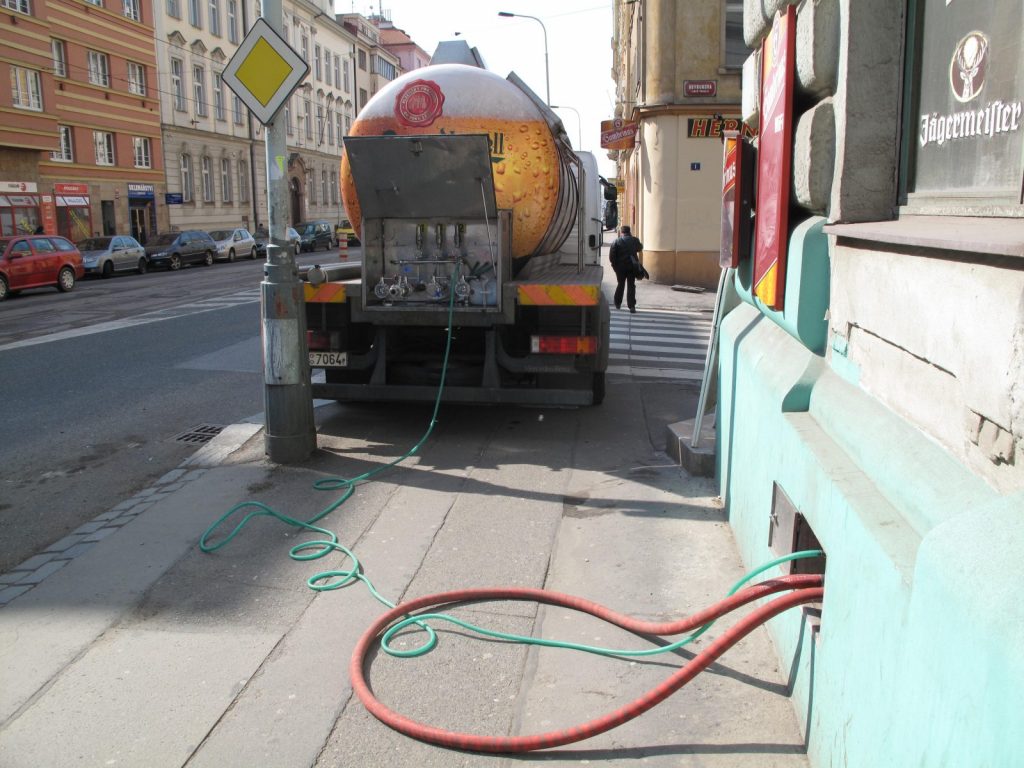
- Tank beer. Pubs that sell a lot of beer have it delivered unpasteurised by tanker straight into tanks in the cellar. Look for «tankové pivo» or «tank» on the sign or the menu.
- Few beers, a lot of turnover. One or two beers on tap that flow all day are usually fresher than ten taps that are rarely touched.
- The rinser at the tap. Watch the tapster: each glass goes onto the rinser before it goes under the tap.
- The atmosphere. Gibiš insists that the pub itself and the tapster’s attitude matter as much as the technique. A beer poured with care in a pub that people enjoy simply tastes better.
Reading a Czech beer menu
- The degree sign is not the alcohol. 10° or 12° shows the strength of the wort the beer was brewed from. A 10° «výčepní» beer is lighter, at around 4% alcohol; a 12° «ležák» (lager) is fuller, usually somewhere between 4.5% and 5%. The alcohol content is listed separately.
- Colour: «světlé» is pale, «polotmavé» amber, «tmavé» dark. «Nefiltrované» means unfiltered.
- Size: «pivo» alone gets you half a litre; ask for «malé» for a 0.3 l glass.
- The beer mat tally. In traditional pubs the waiter marks each beer on a slip of paper or your beer mat and brings the next one when your glass is nearly empty. Put the beer mat on top of your glass when you have had enough.
Go to the source. The Pilsner Urquell brewery in Plzeň, where pale lager was born, is less than 100 km from Prague. A private transfer from Prague to Plzeň costs from 100 € per car, and your driver drops you at the brewery gate.
Frequently asked questions
How can you tell if a beer is poured well?
Look at the foam and the glass. A good beer has a tall, white, creamy head of very fine bubbles that holds for minutes, and it comes in a clean, wet, cold glass with no streaks on the rim and no bubbles clinging to the walls.
What do the rings on a beer glass mean?
The rings of foam left on the inside of the glass after each sip are a good sign. They show that the glass was clean and that the foam was dense. A glass that stays smooth usually means the beer or the glass was not right.
What is the difference between hladinka, šnyt and mlíko?
Hladinka is the classic pour, a full beer under a creamy head of foam. Šnyt is a smaller tasting pour with more foam and room left in the glass. Mlíko is a glass almost completely of wet foam: sweet, barely fizzy and drunk quickly.
What does 10° or 12° mean on Czech beer?
It is the strength of the wort the beer was brewed from, not the alcohol content. A 10° beer has around 4% alcohol and a 12° lager usually 4.5–5%.
What is tank beer?
Tank beer is unpasteurised beer delivered by tanker from the brewery and pumped into tanks in the pub’s cellar. It is served without being pasteurised or kegged, which is why many people find it fresher.
Who is the best tapster in the Czech Republic?
The 2026 Pilsner Urquell Master Bartender competition was won by Filip Gibiš, who runs the small pub U Vandírků in Kyšice near Kladno.
How do I stop the waiter bringing more beer?
In traditional Czech pubs a new beer arrives when your glass is nearly empty. To stop, put your beer mat on top of the glass and ask for the bill.
Expert advice: Filip Gibiš, interviewed by Novinky.cz.