Kutná Hora Free Audio Guide and Walking Tour in 11 Stops
Kutná Hora grew rich on silver and was for a time the second town of the Kingdom of Bohemia after Prague. This page is a free audio guide to it in English, written out and read aloud: eleven stops from the Sedlec Ossuary to St Barbara’s Cathedral, about 4.3 km and three to four hours with visits. Keep the page open on your phone and play or read each stop as you reach it. Walking the route costs nothing; you pay only for the ossuary, the churches and the museums you go into.
Listen to the audio guide — each stop below has its own track, about a minute long. Start with the introduction:
Or download the whole tour as one MP3 (8 minutes, 4 MB) before you leave, so it plays without mobile data.
Fixed price car, up to 4 · minivan, up to 8 · confirmed in writing
Private day trip from your Prague hotel to Kutná Hora and back
- Pick-up at your hotel or apartment in Prague, at the time you choose
- About an hour and a quarter to Kutná Hora; the driver drops you at the Sedlec Ossuary, the start of this walk
- The driver waits while you walk, visit and have lunch — and can take you from Sedlec into the old town
- Back to your hotel in Prague the same evening
- Price for the whole car, not per person: fuel, tolls, parking, waiting and child seats included
Tell us the date, your hotel in Prague, when you would like to leave and how many of you there are — we confirm the car and the price in writing. +420 773 477 799 (WhatsApp, Viber, Telegram) · cz@cztransfer.com · more about the trip
Order
How you can pay
- Cash to the driver — euros, Czech crowns, US dollars or pounds sterling
- Card to the driver, contactless — Visa, Mastercard, Maestro, American Express, or pay by phone
- Card or PayPal online, before the trip — Visa, Mastercard, American Express; the payment processor adds a 6% fee
- Crypto, before the trip — USDT (TRC-20) or Bitcoin
Payment details · no deposit, pay at the end of the trip if you like
Before you set off
- Distance: about 4.3 km. Half of it is the walk from Sedlec into the old town, which you can also do by car, bus or train
- Time: three to four hours with visits; add an hour and a half for the silver mine
- Book ahead: the Sedlec Ossuary has timed entry, and tickets often sell out in summer. Buy them online for a fixed time
- Free: the streets and squares, the Stone Fountain, the plague column and the terrace on Barborská
- Paid: the ossuary and the Sedlec cathedral (one ticket), St Barbara’s, the Italian Court, the silver museum and mine
- Shoes: the old town is hilly and cobbled; wear comfortable shoes with a good grip
- Map: open the route in Google Maps
The walk starts in Sedlec on purpose. The ossuary is the busiest sight in Kutná Hora; get there early, then let the crowds go one way while you walk into the old town and finish at its greatest building.
Route map
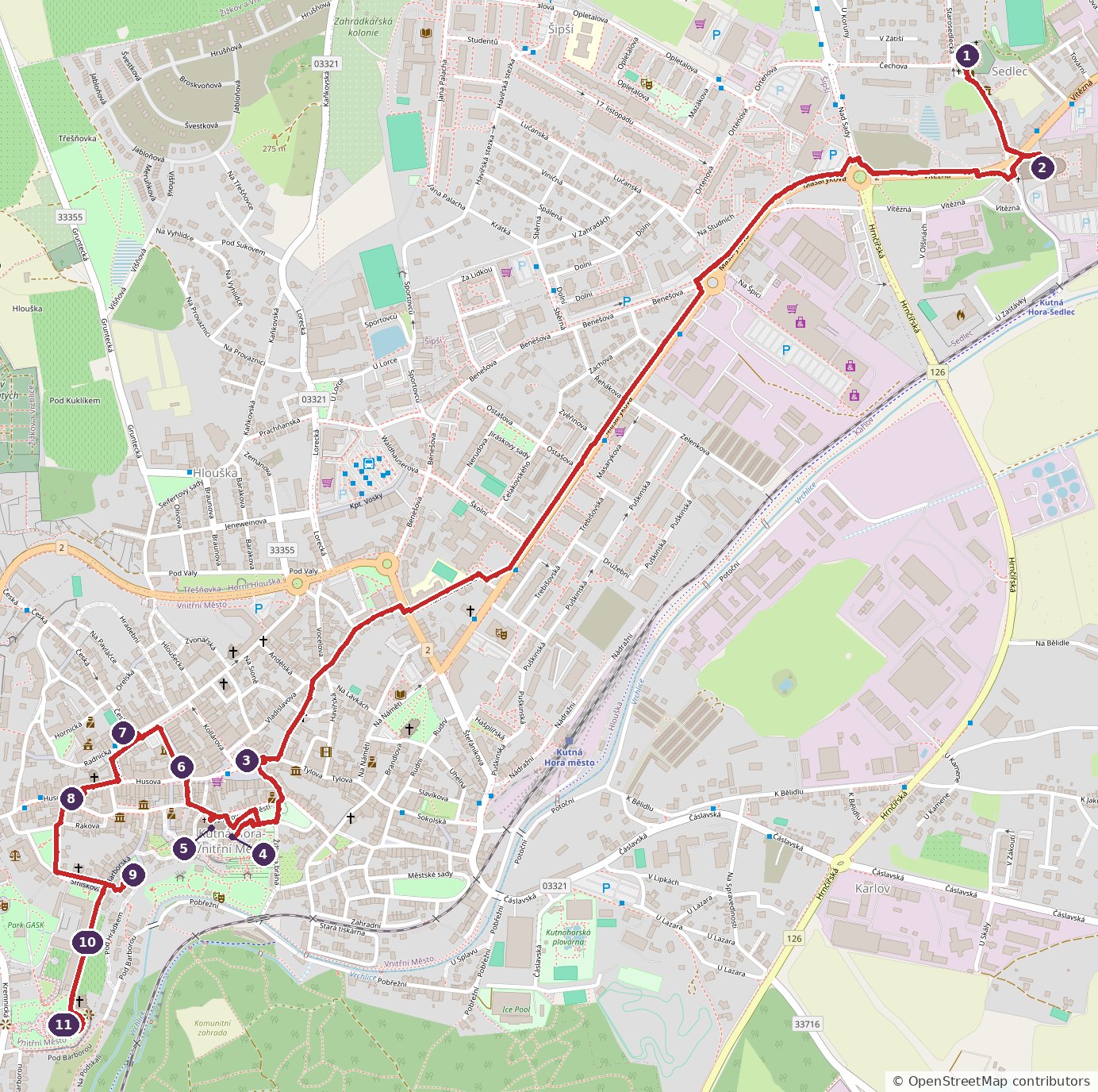
The whole route, from Sedlec (stops 1 and 2) into the old town. The old town in detail:
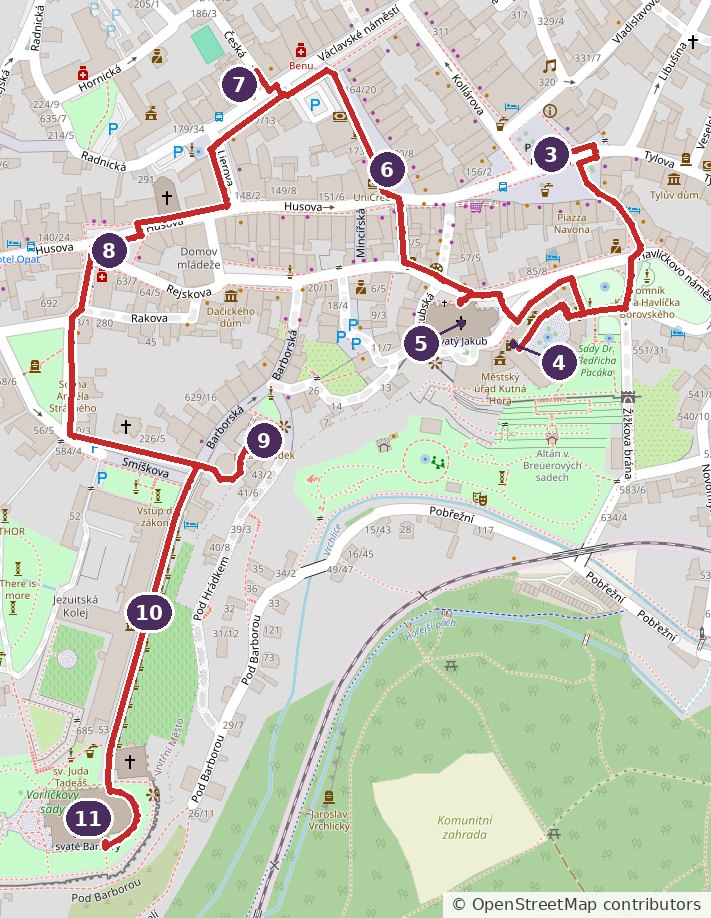
1 Sedlec Ossuary · 2 Cathedral of the Assumption, Sedlec · 3 Palackého Square · 4 Italian Court · 5 St James’s Church · 6 plague column · 7 Stone House · 8 Stone Fountain · 9 Hrádek and the silver mine · 10 Barborská and the Jesuit College · 11 St Barbara’s Cathedral. Tap a map to open it full size. Map data © OpenStreetMap contributors.
1. The Sedlec Ossuary
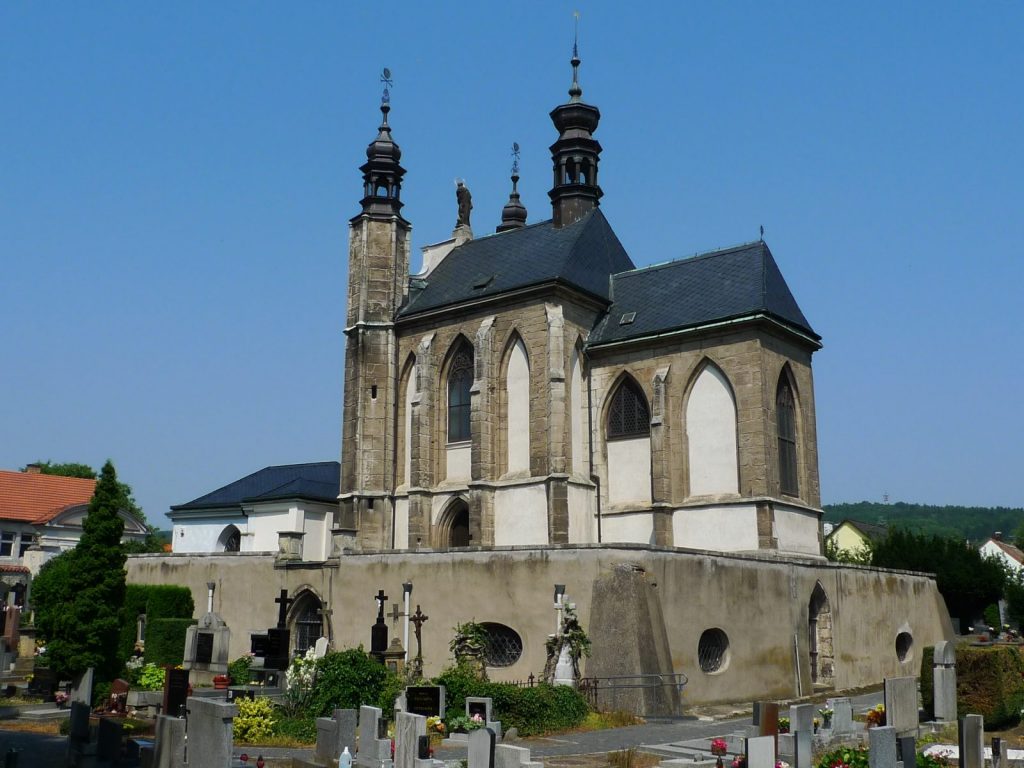
The Cemetery Church of All Saints; the ossuary is in its lower chapel. Photo: H2k4 / CC BY-SA 3.0
Begin with the most famous and the strangest sight in Kutná Hora. Under the little cemetery church of All Saints in Sedlec lies a chapel decorated with human bones — the remains of tens of thousands of people.
The story starts in 1278, when the abbot of the Cistercian monastery here was sent to the Holy Land by King Ottokar II and brought back a handful of earth from Golgotha. He scattered it over the cemetery, and suddenly everyone in central Europe wanted to be buried here. Plague and the Hussite wars filled the graveyard many times over, and the bones were stacked in the chapel.
Their present arrangement dates from 1870, when the Schwarzenberg family, who owned the estate, asked a local woodcarver, František Rint, to put them in order. Look for the great chandelier, the Schwarzenberg coat of arms with a raven pecking at a Turk’s head, and Rint’s own signature — also made of bones.
Entry is by timed ticket, the visit to the lower chapel is short, and photography is not allowed there. Remember that this is a consecrated place, and behave as you would in a church.
2. The Cathedral of the Assumption in Sedlec
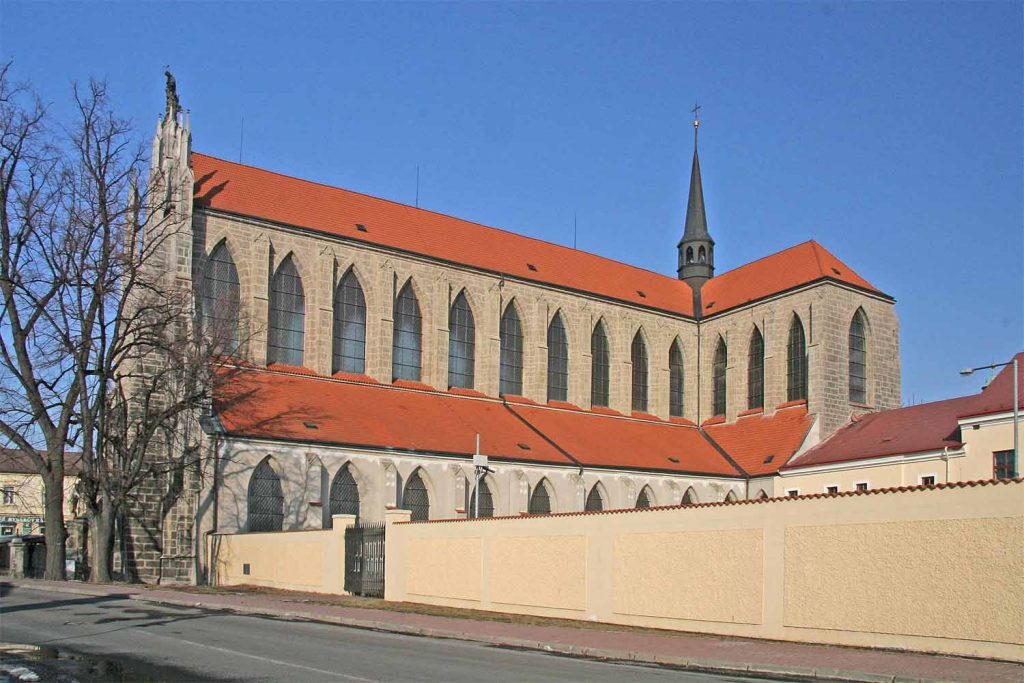
The Cathedral of the Assumption in Sedlec. Photo: Zp / CC BY-SA 3.0
A few minutes’ walk away stands the church the ossuary belonged to: the Cathedral of the Assumption of Our Lady and St John the Baptist. It was built in the early 14th century for the Cistercian monastery, and it was one of the largest churches in Bohemia.
The Hussites burned it in 1421, and for almost three hundred years it stood in ruins. In the early 18th century the architect Jan Blažej Santini rebuilt it in his own unique style, Baroque Gothic, keeping the medieval shape and adding Baroque light. Your ossuary ticket includes it.
From here it is about two kilometres to the old town, half an hour on foot along Masarykova street. If you came with a driver, this is the moment to use the car.
3. Palackého Square
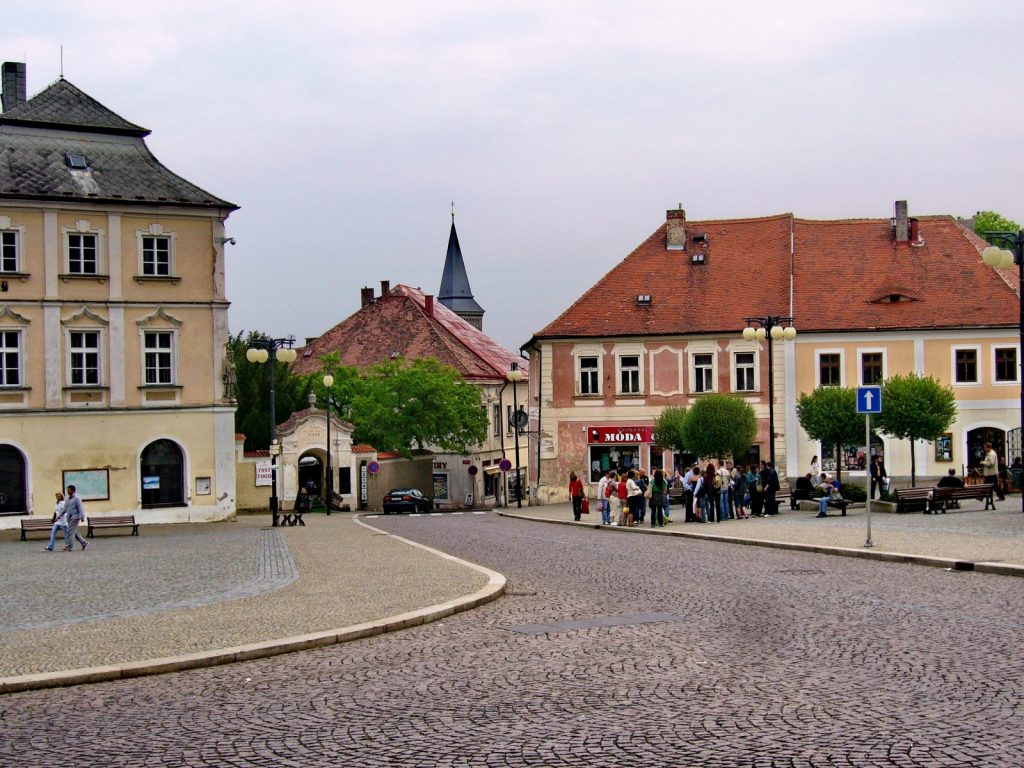
Palackého Square, the main square of Kutná Hora. Photo: Tanya Dedyukhina / CC BY 3.0
You are now in the old town, on its main square. In the late 13th century, silver was found under these hills, and miners poured in from all over Europe. Within a few decades Kutná Hora was one of the richest towns on the continent, and the silver from its mines paid for much of what you will see today.
The tourist information centre is on this square, a good place to pick up a town map, check opening times and buy tickets for the sights ahead.
4. The Italian Court
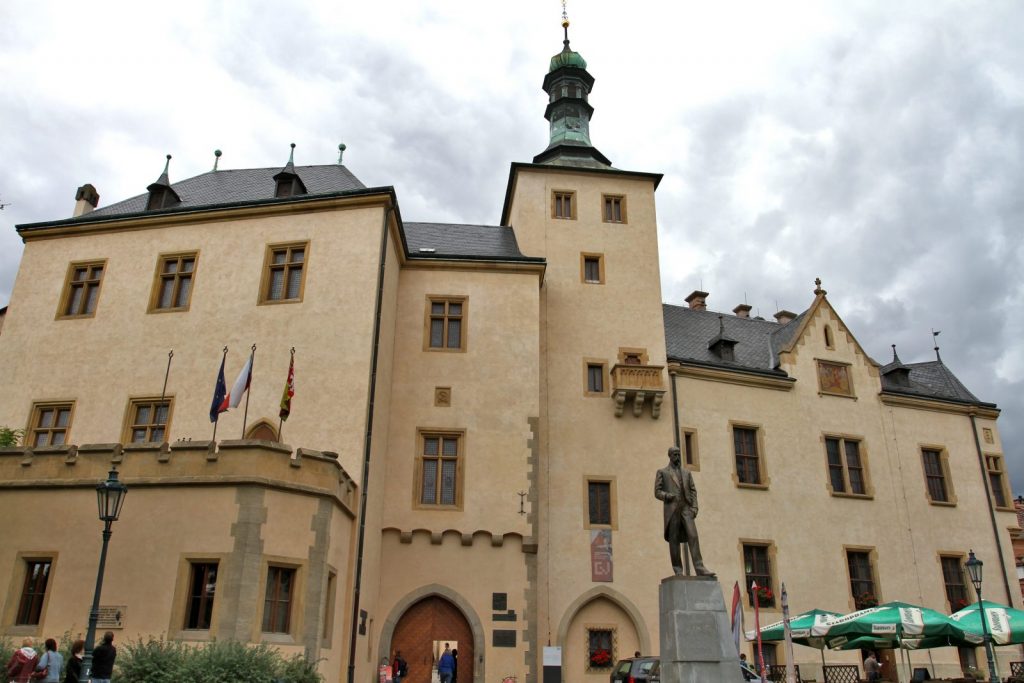
The Italian Court, once the royal mint. Photo: Ondřej Kořínek / CC BY-SA 3.0
Just behind the square stands the Italian Court, the reason Kutná Hora mattered to kings. In 1300 King Wenceslas the Second invited experts from Florence to reform his coinage and gathered all minting in one place, here. The Prague groschen struck in this courtyard became one of the most trusted silver coins in Europe.
The building also served as a royal residence. In 1409 King Wenceslas the Fourth issued the Decree of Kutná Hora here, which gave the Czech nation the upper hand at the university in Prague. Guided tours show the old minting workshops, the royal chapel and the audience hall.
5. St James’s Church
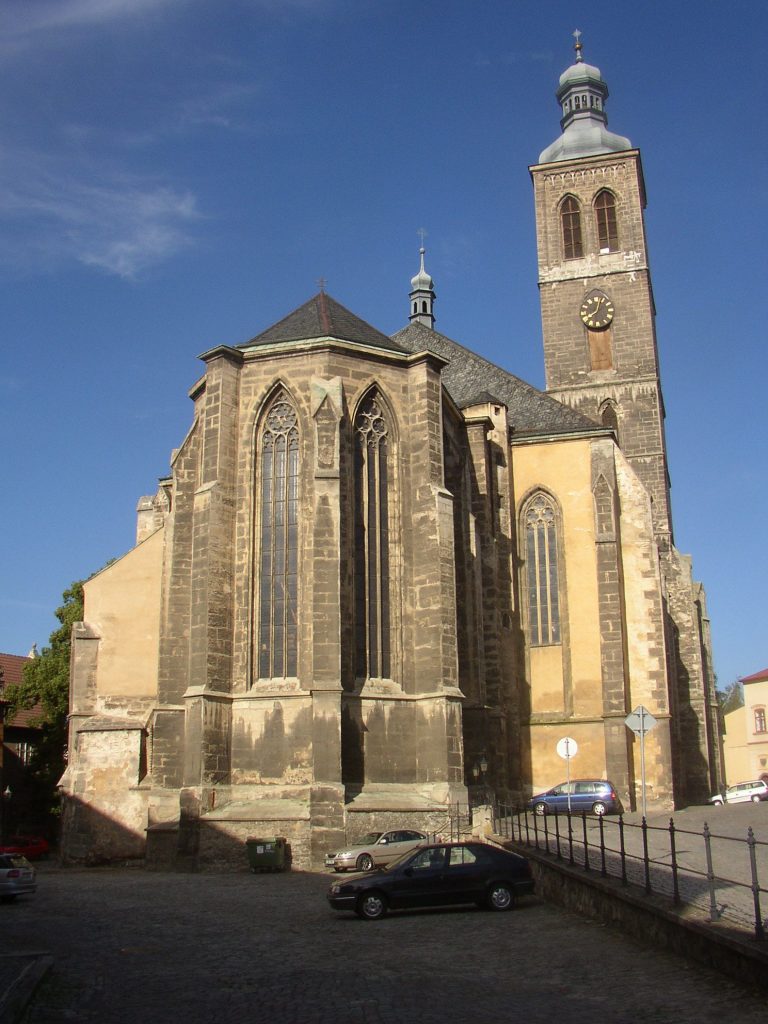
The Church of St James and its tower. Photo: Miaow Miaow / public domain
Next to the Italian Court rises St James’s Church, the oldest of the town’s great churches and the one the miners built first, in the 14th century. Its tall tower was for centuries the landmark of the town.
The builders planned two towers, but the ground here proved so unstable that the second was never finished. Look closely at the one that stands: it leans slightly to the north-west.
6. The plague column
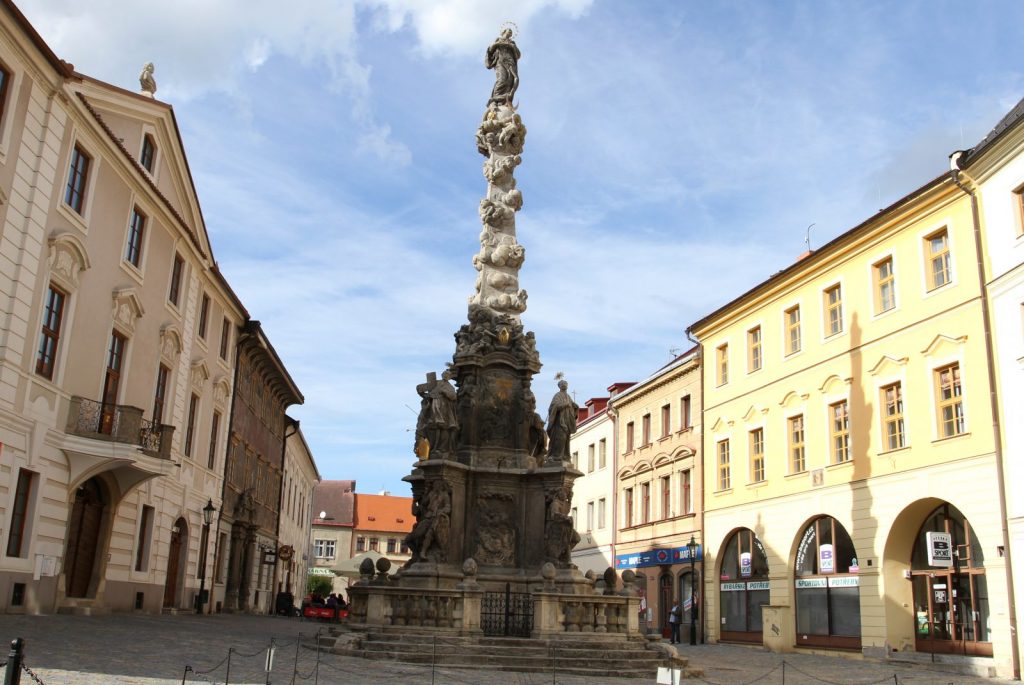
The Baroque plague column. Photo: Fotograf ondra / CC BY-SA 3.0
Walk up Šultysova street to the Baroque plague column, one of the finest in the country. It was made in 1713–1715 by the Jesuit sculptor František Baugut, in thanks for the end of a plague epidemic, and it is crowded with saints and scenes carved in stone.
Plague columns like this one stand in many Czech towns: they were a thank-you for surviving and a prayer that the disease would not come back.
7. The Stone House
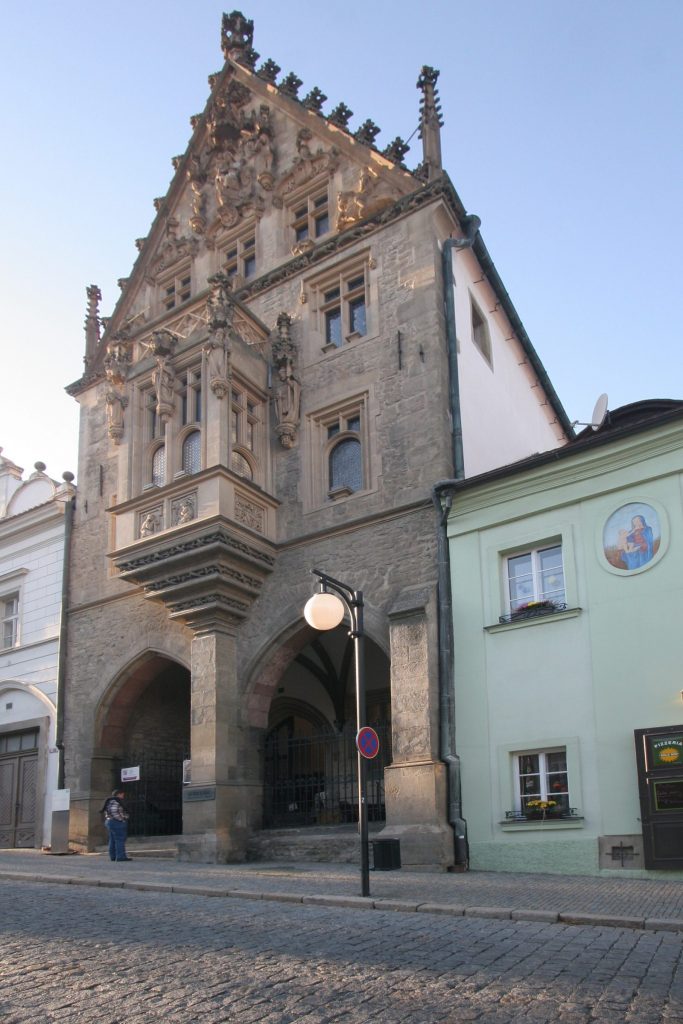
The Stone House and its carved gable. Photo: Petr1888 / CC BY-SA 3.0
A few steps further, on Václavské náměstí, stands the Stone House, a late Gothic burgher house from the end of the 15th century with a richly carved gable full of figures. It shows how wealthy the town’s merchants and mine owners were at the height of the silver boom.
Today the house is part of the town museum, with exhibitions about life in Kutná Hora.
8. The Stone Fountain
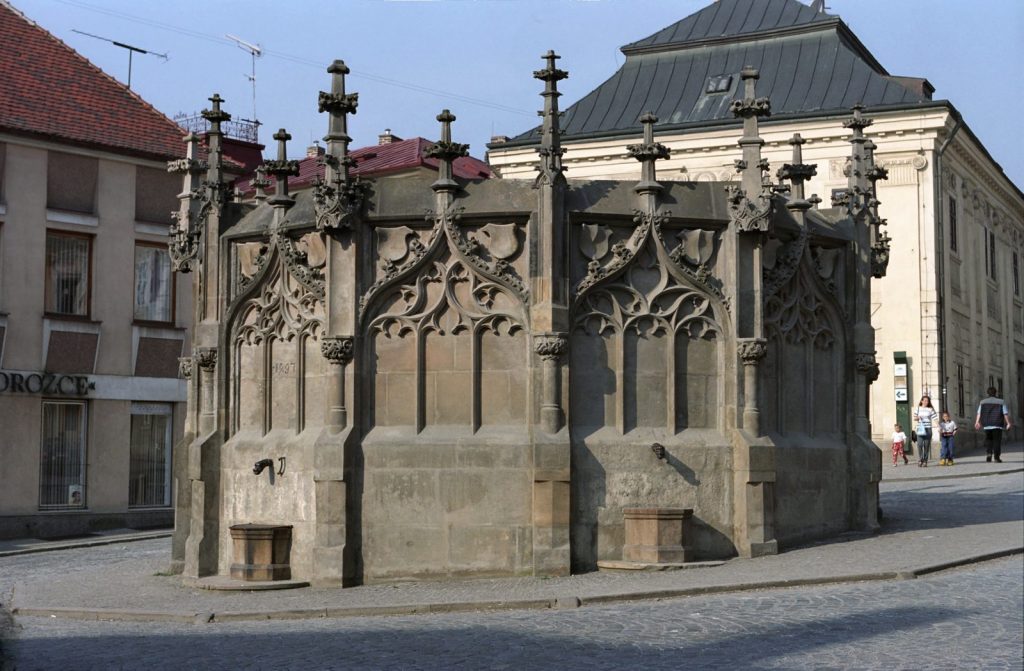
The twelve-sided Gothic Stone Fountain. Photo: Jerzy Strzelecki / CC BY 3.0
A short walk south-west, down Husova street, brings you to Rejsek Square and the Stone Fountain, a twelve-sided Gothic fountain from the 1490s, attributed to Matěj Rejsek, one of the builders of St Barbara’s.
It was not a decoration. Mining made the town’s own wells useless, so water was brought here by wooden pipes from springs far outside the town, and this fountain was a reservoir of precious drinking water until the end of the 19th century.
9. Hrádek and the silver mine
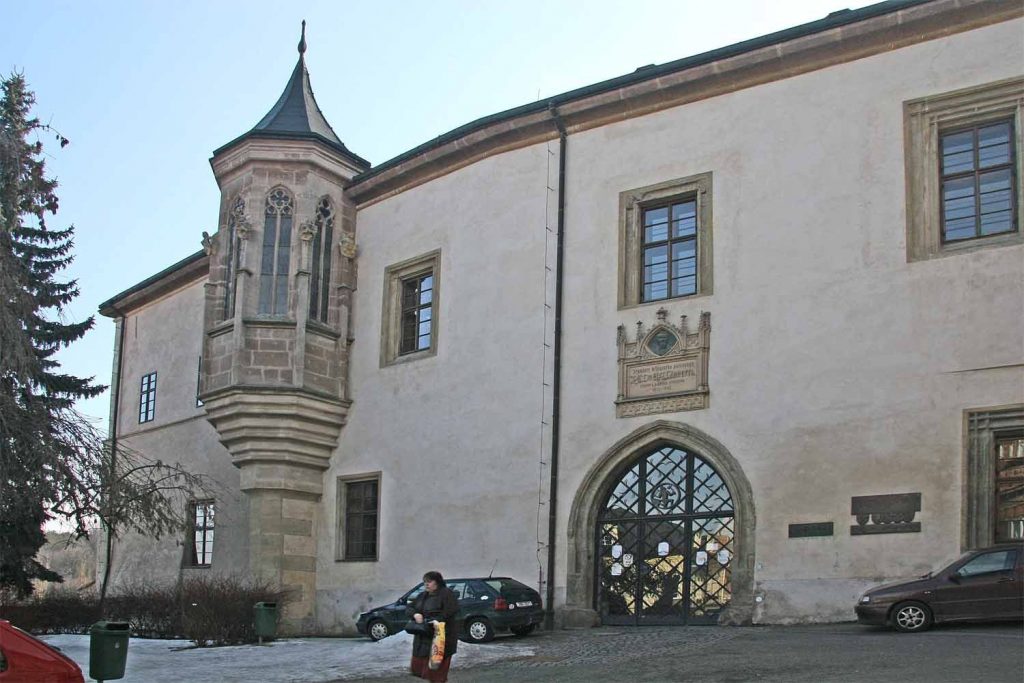
Hrádek, home of the silver museum and the mine tour. Photo: Zp at Czech Wikipedia / CC BY-SA 3.0
Head south to Hrádek, the «little castle», a Gothic palace that now houses the Czech Museum of Silver. Its exhibitions tell the story of the mines, the miners and the money.
The highlight is underground. On the mine tour you put on a miner’s coat, a helmet and a lamp and walk through a real medieval mine tunnel under the town. It is narrow, damp and unforgettable; children must be at least seven. The museum is closed on Mondays, and booking the mine tour in advance is a good idea.
10. Barborská street and the Jesuit College
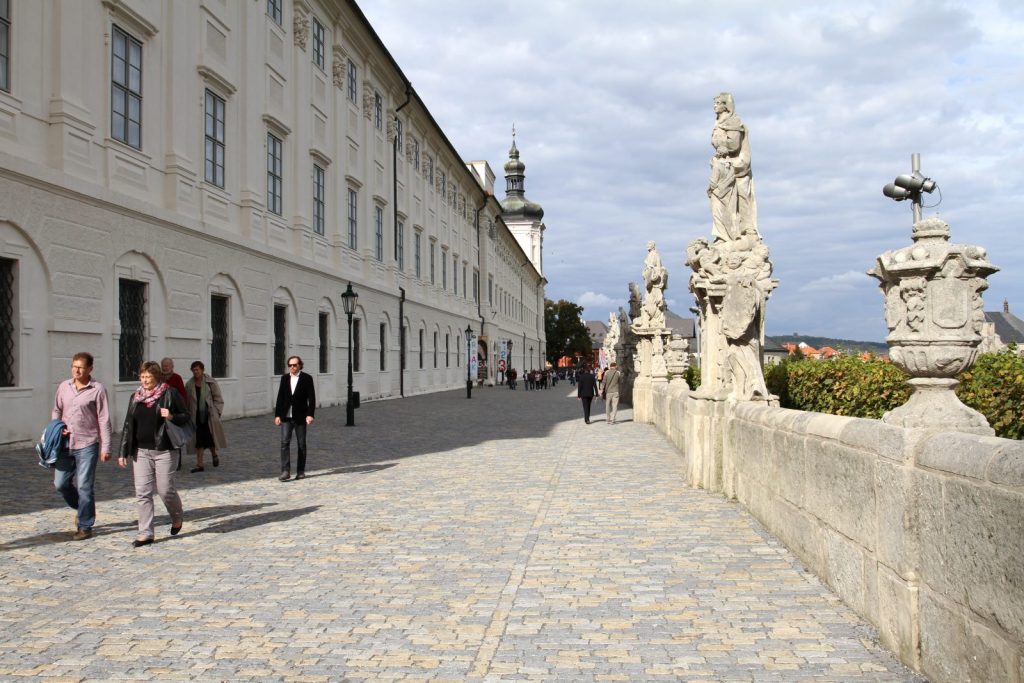
Barborská street, with its statues on one side and the Jesuit College on the other. Photo: Ondřej Kořínek / CC BY-SA 3.0
From Hrádek, Barborská street leads to the cathedral along a terrace lined with Baroque statues of saints, designed by František Baugut, the author of the plague column. People call it the Charles Bridge of Kutná Hora, and the view from it across the valley is one of the best in the town.
The huge building on the right is the Jesuit College, built from the 1660s, when the Jesuits came to bring the town back to the Catholic faith. Today it houses the GASK gallery of modern and contemporary art.
11. St Barbara’s Cathedral
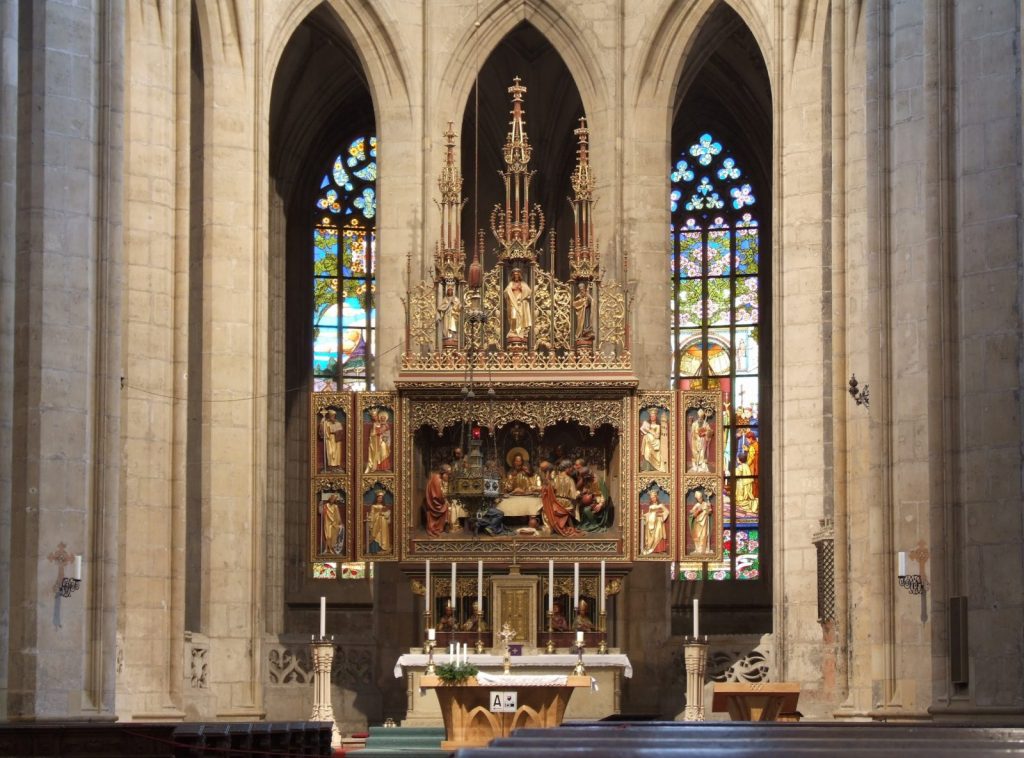
St Barbara’s Cathedral at the end of Barborská street. Photo: Pudelek (Marcin Szala) / CC BY-SA 4.0
The walk ends at St Barbara’s, dedicated to the patron saint of miners and paid for by the miners themselves. Building began in 1388 under the workshop of the Parler family, the builders of St Vitus Cathedral in Prague. The Hussite wars stopped the work; it started again in the 1480s with Matěj Rejsek and Benedikt Ried, who designed the extraordinary star-shaped vaults. The cathedral was finished only in 1905.
Walk around the outside first, to see the three tent-shaped roofs and the forest of flying buttresses. Inside, look for the wall paintings of miners at work and of the minters striking coins — portraits, in effect, of the people who paid the bills.
Together with the old town and the Sedlec cathedral, St Barbara’s has been a UNESCO World Heritage site since 1995. If you came with a driver, this is where you are picked up.
Getting to Kutná Hora from Prague
Kutná Hora is about 80 km and an hour and a quarter by car from Prague. If you are coming for the day, the day trip above gives you a driver who drops you at the ossuary, waits and takes you home in the evening. For one way only, see our taxi from Prague to Kutná Hora. Buses and trains are compared on our how to get there page.
Frequently asked questions
Is there a free audio guide to Kutná Hora in English?
Yes — this page. Every stop has its own English audio track that plays in your phone’s browser, and the whole tour is also one MP3 you can download before you go. No app or account is needed.
How long does a walk around Kutná Hora take?
Three to four hours for this 4.3 km route with visits. About half the distance is the walk from Sedlec into the old town; by car it takes five minutes. The silver mine tour adds an hour and a half.
Do I need to book tickets for the Sedlec Ossuary?
Yes, it is wise. Entry is by timed ticket because the chapel is small, and in summer and around Halloween tickets sell out days ahead. Buy them online for a fixed time.
Can I take photos in the Sedlec Ossuary?
Not in the lower chapel, where the bones are: photography is forbidden there. Please also keep your voice down — it is a consecrated place.
Can we do this walk on a day trip from Prague?
Yes. A private day trip picks you up at your Prague hotel, drops you at the ossuary, waits while you walk and brings you back the same evening, with a fixed price for the whole car.
How far is the Sedlec Ossuary from the old town?
About two kilometres, half an hour on foot. You can also take a local bus or a train between Kutná Hora-Sedlec and Kutná Hora město stations, or ask your driver to take you.